
Managing an autoimmune condition in India often feels like an uphill battle. Whether you are dealing with Hashimoto’s Thyroiditis, Rheumatoid Arthritis (RA), Lupus (SLE), Psoriasis, or Inflammatory Bowel Disease (IBD), standard medical treatment frequently focuses primarily on managing symptoms or suppressing the immune system.
While medication is often vital during severe flare-ups, long-term remission requires addressing the underlying triggers of immune hyper-reactivity. This is where specialized medical nutrition therapy plays a transformative role./
💡 Need personalized clinical guidance? Explore our core service framework or book a direct consultation with an Autoimmune Disease Nutritionist in India.
Understanding Autoimmunity: Why the Immune System Attacks
Autoimmune conditions occur when the immune system loses immune tolerance, mistaking the body’s own healthy cells for foreign invaders. Instead of protecting you, antibodies attack specific tissues:
- Thyroid Gland: Hashimoto’s Thyroiditis, Graves’ Disease
- Joints & Connective Tissue: Rheumatoid Arthritis, Ankylosing Spondylitis
- Skin: Psoriasis, Vitiligo, Alopecia Areata
- Gut Lining: Celiac Disease, Crohn’s Disease, Ulcerative Colitis
- Systemic Organs: Systemic Lupus Erythematosus (SLE)
While genetic predisposition plays a role, environmental triggers—particularly diet, gut permeability, nutrient deficiencies, and metabolic stress—act as the primary switches that activate or escalate these conditions.
The 4 Primary Root Causes Driven by Diet & Gut Health
To achieve sustainable remission, a functional clinical nutrition strategy focuses on four primary physiological drivers:
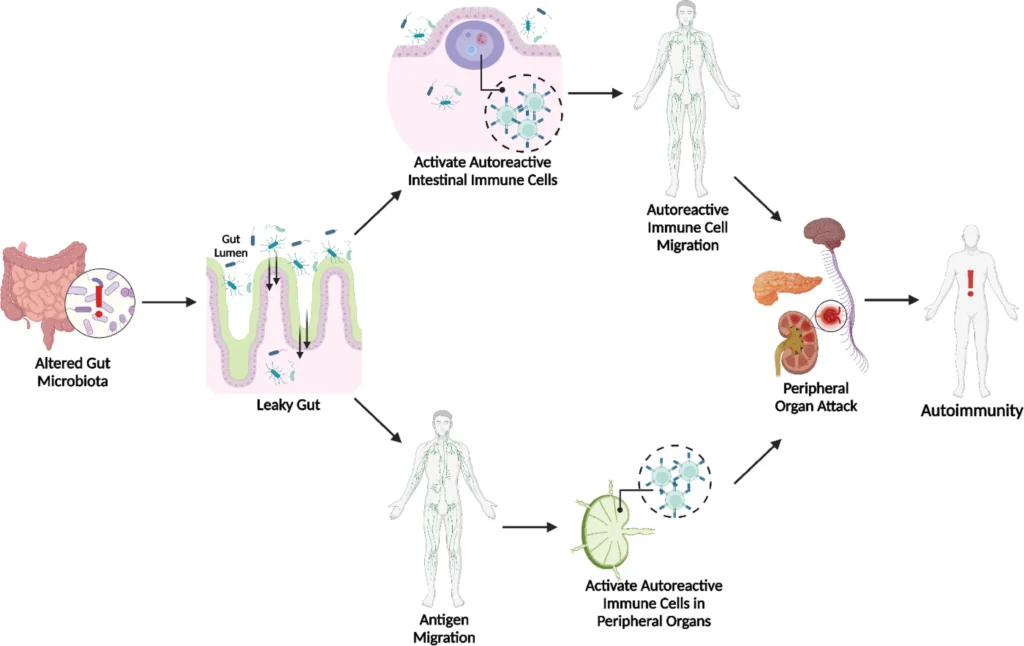
1. Intestinal Permeability (“Leaky Gut”)
The mucosal lining of your gut acts as a selective barrier. When this barrier is compromised due to ultra-processed foods, chronic stress, or dysbiosis, undigested food proteins and bacterial endotoxins (LPS) leak directly into the bloodstream. This constantly alarms the immune system, leading to systemic inflammation.
2. Molecular Mimicry
Certain dietary proteins share a remarkably similar amino acid structure with human tissues. For example, gluten proteins closely resemble thyroid tissue proteins. When the immune system creates antibodies against these dietary proteins, it can inadvertently attack your own organ structures.
3. Chronic Micronutrient Deficiencies
Critical micronutrients function as regulators of T-cell activity. Deficiencies in Vitamin D3, Zinc, Selenium, Magnesium, and Omega-3 fatty acids remove the biological “brakes” on the immune system, making overactive immune responses far more likely.
4. Pro-Inflammatory Diets & Gut Dysbiosis
High intakes of refined seed oils, artificial additives, excess sugar, and low dietary fiber alter the gut microbiome composition. An imbalance between beneficial and opportunistic bacteria triggers ongoing inflammatory cascades throughout the entire body.
🩺 Struggling with fatty liver alongside gut issues? Learn how hepatic fat and intestinal dysbiosis compound systemic inflammation on our dedicated Reversing Fatty Liver Disease service page.
The 4-Stage Clinical Remission Framework
A generic diet chart is rarely effective for complex autoimmune conditions. A clinical approach requires a structured, multi-phase strategy tailored to your diagnostic markers and individual history.
Stage 1: Assessment & Inflammatory Baseline
Before changing your diet, comprehensive diagnostic evaluation is essential. This includes analyzing:
- Inflammatory Markers: High-Sensitivity C-Reactive Protein (hs-CRP), ESR.
- Autoantibody Titers: Anti-TPO, Anti-TG, ANA, RA Factor, Anti-CCP.
- Nutritional & Metabolic Status: Vitamin D, B12, Ferritin, Fasting Insulin, Lipid Profile.
Stage 2: Precision Elimination & Gut Barrier Repair
During active flare-ups, a targeted Autoimmune Protocol (AIP) or modified elimination strategy is implemented. This phase systematically removes common dietary irritants—such as gluten, refined sugars, ultra-processed oils, and specific cross-reactive foods—while loading the body with nutrient-dense foods to support mucosal healing.
Stage 3: Controlled Reintroduction & Sensitivity Testing
Once systemic inflammation cools down and symptoms clear, foods are systematically reintroduced one at a time in a controlled sequence. This process identifies your exact personal triggers while expanding your diet as broadly as possible.
Stage 4: Long-Term Maintenance & Remission Blueprint
The final step is establishing a sustainable, practical nutrition lifestyle designed to maintain low antibody levels, preserve gut integrity, and prevent future relapses.
📋 Want a structured roadmap? View our complete 4-Stage Remission Strategy directly on the Autoimmune Clinical Care Page.
Take Charge of Your Health with Specialized Clinical Nutrition
Autoimmune conditions do not have to dictate your quality of life. By shifting from temporary symptom suppression to root-cause resolution, you can calm hyperactive immune responses and support long-term healing.
Whether you are managing Hashimoto’s, Rheumatoid Arthritis, Psoriasis, or unexplained systemic inflammation, personalized clinical protocols are available to support your recovery journey.